
Venturi Scrubbers & Wet APC
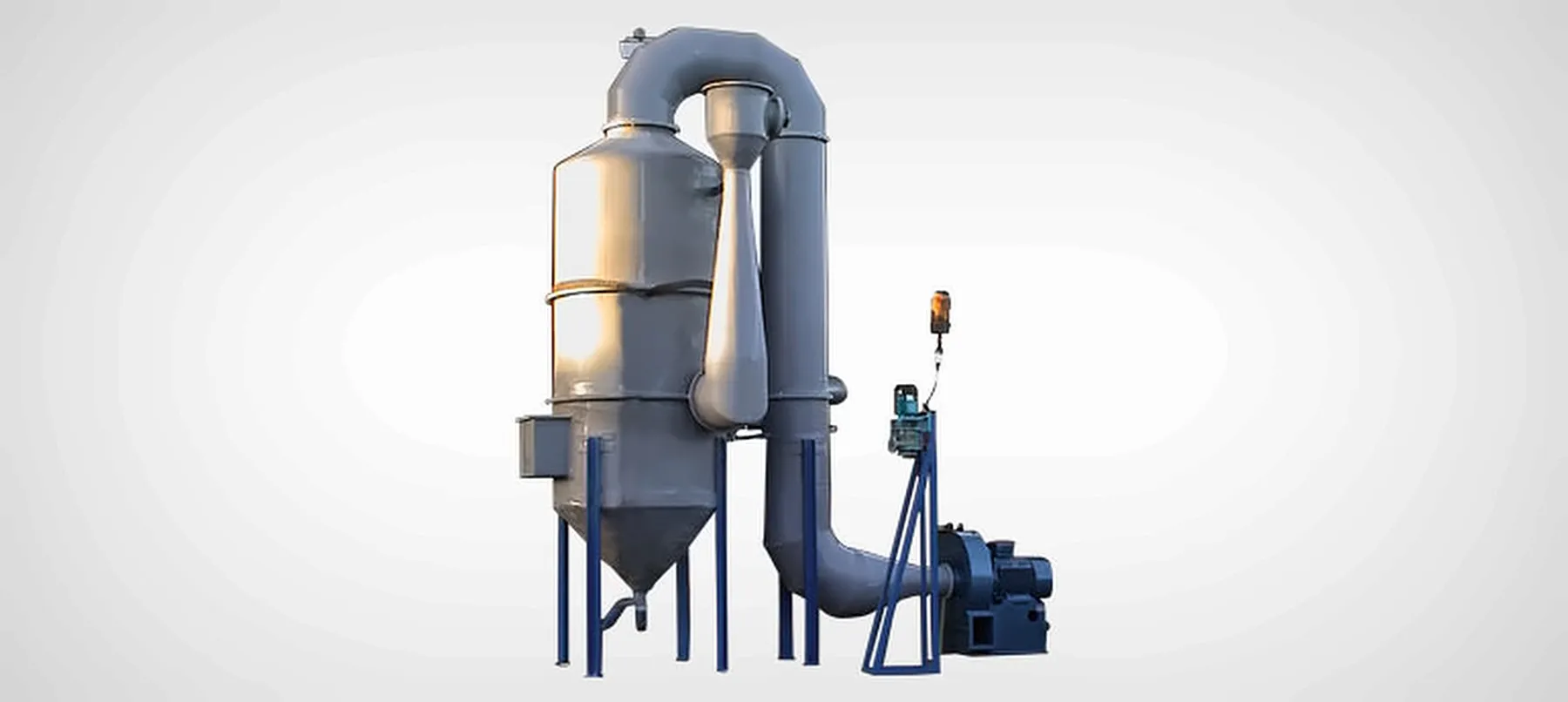
Venturi scrubbers capture particulates and soluble gases by accelerating the gas stream through a throat and atomising scrubbing liquid into it. They tolerate high temperatures, sticky or wet dust and acidic gases, conditions in which dry collectors struggle.
Designed and engineered in our own workshops, in corrosion-resistant construction
How it works
Scrubbing in four steps: wet, accelerate, separate, demist.
How a venturi scrubber works
- Flooded elbow, where the scrubbing liquor meets the gas
- Venturi: converging section, throat and diverging section
- Cyclonic separator with tangential entry
- Mist eliminator
- Recirculation tank
- Recirculation pump and liquor line back to the elbow
- Induced-draft (ID) fan
- Stack
Dust-laden gasScrubbing liquorCleaned gas
- 1
Wetting
Water or a reagent is mixed turbulently with the incoming gas in a flooded elbow.
- 2
Acceleration
At the venturi throat the gas velocity rises sharply, shearing the liquid into fine droplets that capture particles and absorb soluble gases.
- 3
Separation
Tangential entry into the separator spins the gas, throwing particle-laden droplets to the wall and down to the drain.
- 4
Demisting
A mist eliminator removes residual moisture before the cleaned gas is drawn to the stack by the ID fan.
At a glance
Key specifications.
- Gas volume
- Up to 2,00,000 m³/hr
- Duty
- Particulate and gaseous (including acidic) emissions
- Liquid circuit
- Recirculated, with solids held to about 2% by volume
What's inside
Main components.
- Flooded elbow for liquid introduction
- Venturi section: converging inlet, throat and diverging outlet
- Cyclonic moisture separator with tangential entry
- Mist eliminator at the gas outlet
- Recirculation tank, pumps and piping
- Corrosion-resistant materials of construction
Materials of construction are selected for the chemistry of the gas and the scrubbing liquor.
Where it works
Applications and industries.
Lifecycle services
- Performance assessment and upgrades of existing scrubbers
- Spares and corrosion-resistant replacements
- Annual maintenance contracts (AMC)
- Plant operation and maintenance
Plant O&M
Operating a scrubber? Keep pressure drop and liquor in balance.
Our teams watch pressure drop, liquor flow and pH, and keep nozzles, pumps and separators in service.
Explore Plant O&MRelated systems.
Request a quote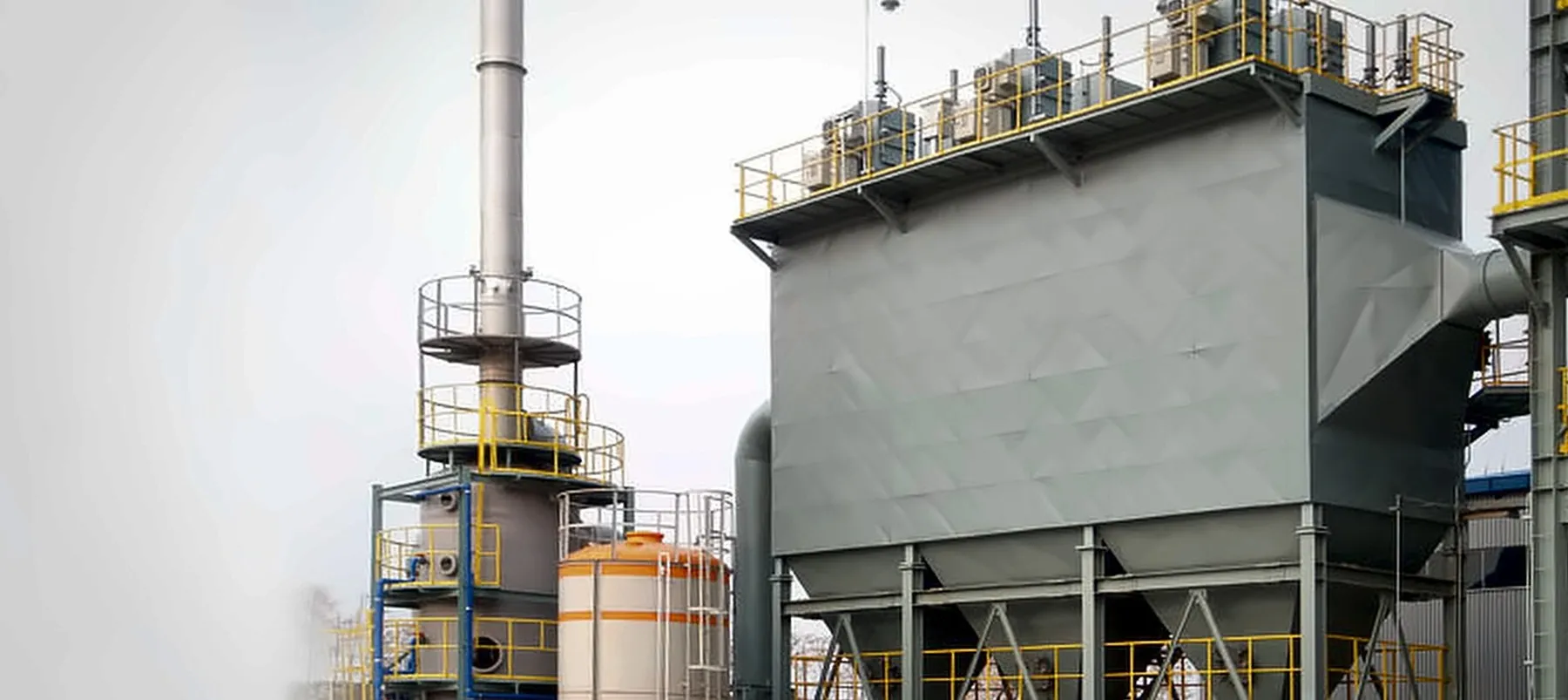
Electrostatic Precipitators (ESP)
High-voltage particulate collection for boiler, kiln, sinter and furnace off-gases.
View specifications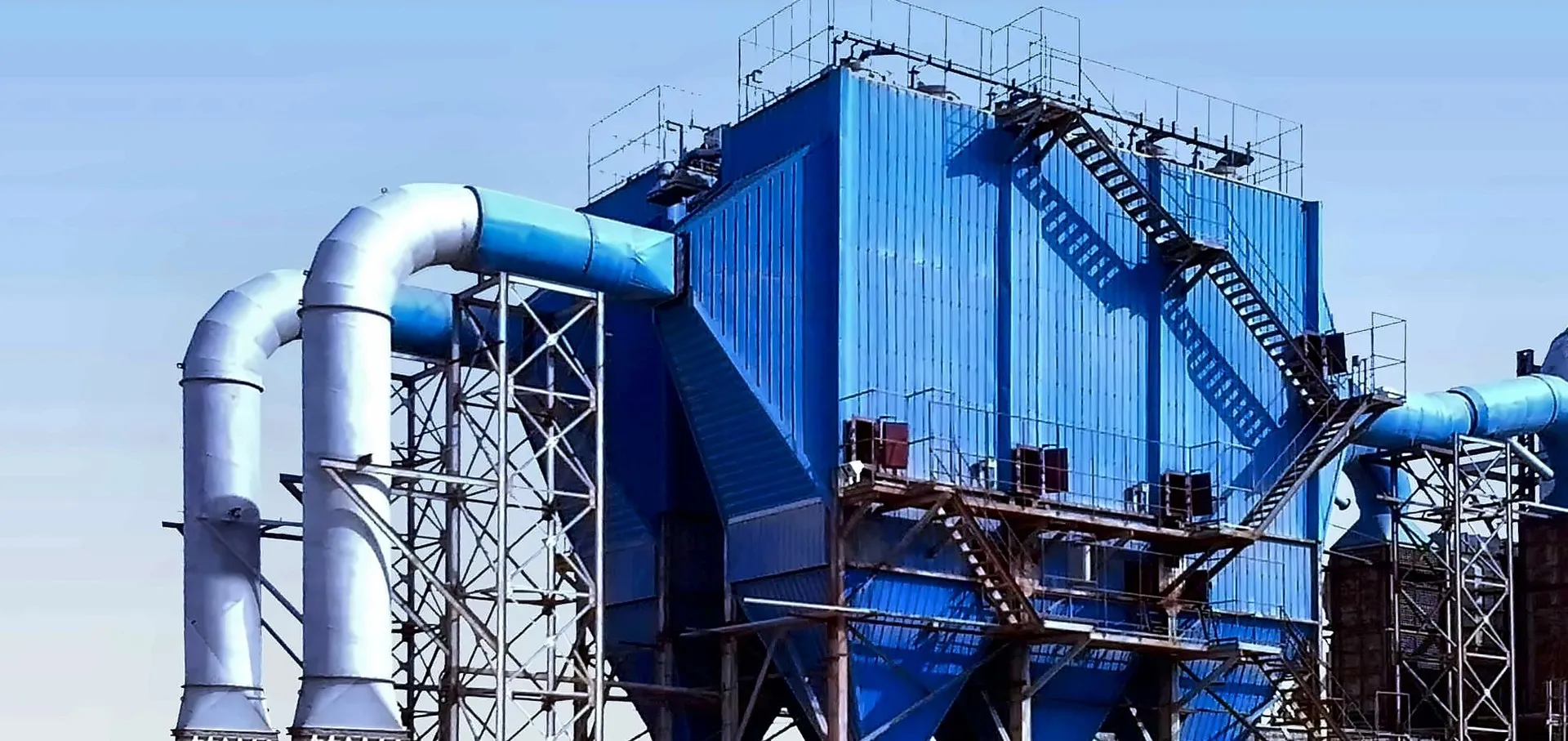
Pulse-Jet Bag Filters
On-line and off-line pulse-jet filtration for fine and sub-micron particulates.
View specifications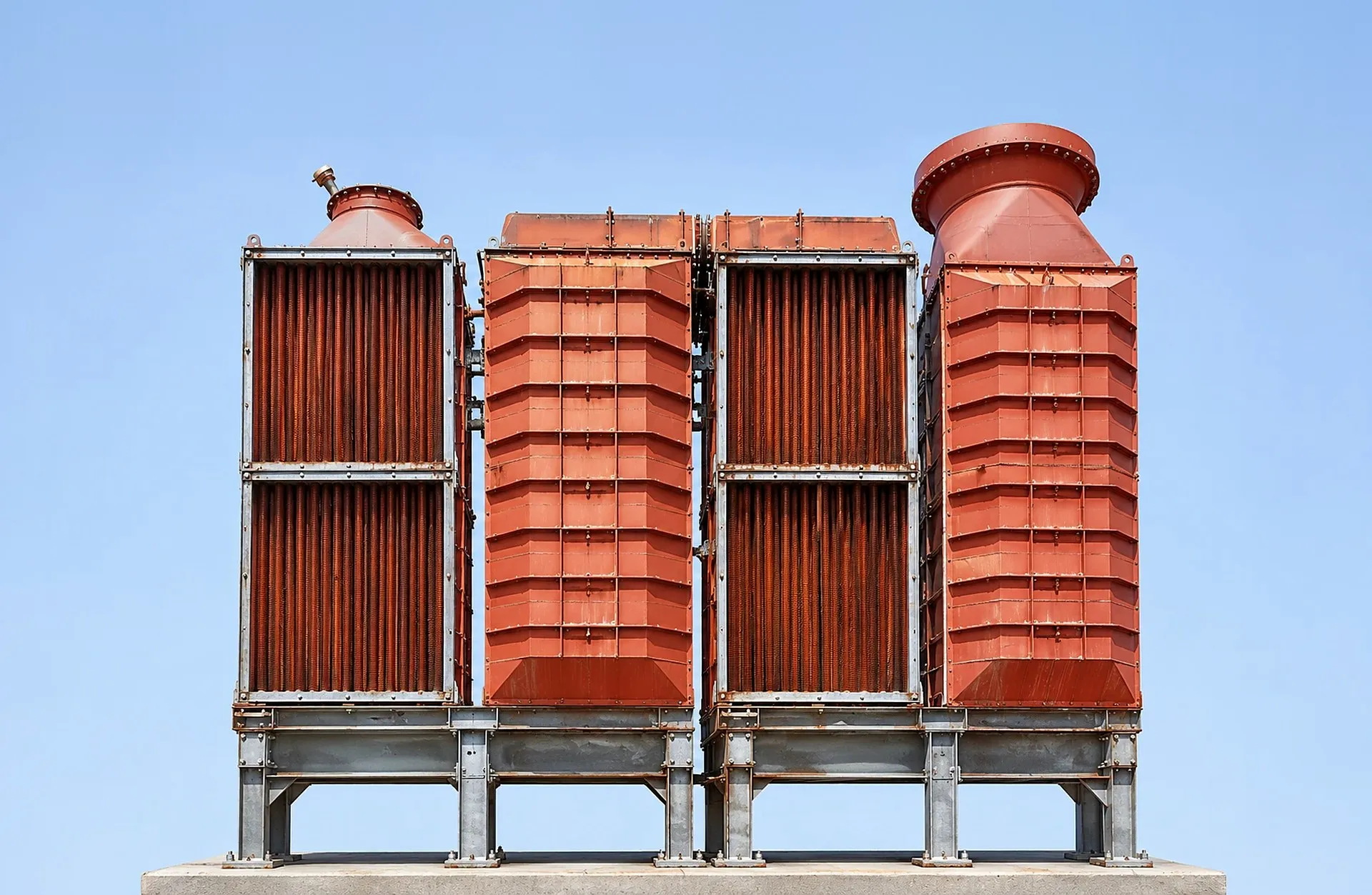
Heat Exchangers
Air-cooled gas coolers that dissipate process heat and bring hot gas down to a safe temperature ahead of the filter.
View specifications